

Registration renewal shows up in the mail, and the sticker has to happen first. North Carolina wants a safety inspection every year, within 90 days of that renewal, and drivers in Wake County get the emissions scan on top of it, so it’s two tests in one visit.
Most failures come from small things: a burnt plate lamp, a bald inside edge on a rear tire, tint a shade too dark, or a dash light nobody wanted to deal with. Peak Auto handles North Carolina inspections in Apex, and we would rather catch those things at the counter than on the report.
Quick Summary: Key Takeaways
- Annual and timed: North Carolina requires a safety inspection every year, done within 90 days before your registration renewal date.
- Wake County adds emissions: Apex and Cary vehicles from 1996 and newer get an OBD scan, and a lit check engine light is an automatic fail.
- Tread rule: any tire below 2/32 inch of tread fails, and inside edges wear first on Audi, BMW, and Mercedes rear tires.
- Tint limit: North Carolina requires at least 32 percent light transmittance, so dark aftermarket film on a lease returns as a failure.
- New car exemption: vehicles under three model years old with less than 70,000 miles skip the emissions portion but still need the safety check.
The safety inspection covers eleven items, and none of them take long
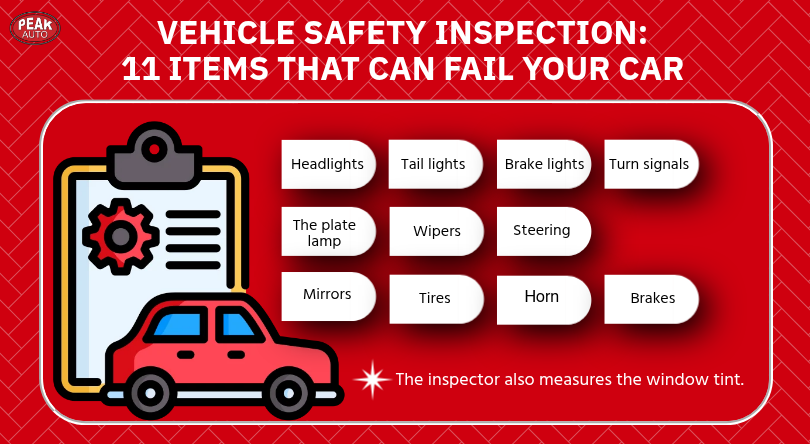
An inspector checks headlights, tail lights, brake lights, turn signals, the plate lamp, the horn, wipers, steering, mirrors, tires, and brakes, then measures the window tint.
None of it is exotic, but one burnt bulb fails the whole car. On a BMW or a Volvo, a failed LED tail lamp often means a whole new lamp module, so plan for more than the price of a two-dollar bulb.
Wake County vehicles also face the emissions scan
Apex sits in Wake County, so the emissions portion applies here. For 1996 and newer vehicles the test is an OBD-II scan of the car’s computer, and the inspector confirms the readiness monitors are set and the malfunction indicator lamp is off.
Clear a code the day before and you fail, because the monitors need miles to reset. A drive cycle can take 100 miles of mixed city and highway driving before the computer reports a completed self-test, so a rushed repair during renewal week backfires. Newer cars catch a break: under three model years old and below 70,000 miles, the emissions test gets waived.
Tires and tint cause more failures than brakes do
Tread depth below 2/32 inch fails, and the wear that fails a European car usually hides on the inside shoulder of a rear tire where negative camber eats rubber first. Check the pressure while you’re at it. The Department of Energy notes that under-inflated tires lower gas mileage by about 0.2 percent for every 1 psi drop, and soft tires chew their edges faster too.
Window tint is the other frequent failure. North Carolina requires at least 32 percent light transmittance on side and rear windows. Film installed in another state often measures well below that limit, and that alone fails an otherwise clean car. If you’re not sure what’s on your windows, have the film measured before inspection day.
A failed inspection also stalls your registration
The Division of Motor Vehicles will not process the registration until the inspection passes, and late tags carry their own penalty on top of whatever repair you were already avoiding.
There’s a driving cost as well, since worn tires and brakes rarely announce themselves. A worn brake pad or a rear tire down to the cords is a real risk on US 64 at rush hour, and the inspection is often the only thing that forces a look at parts you never see.
We inspect and repair in the same visit
As a licensed inspection station and a full repair shop, we can fix what fails without sending you somewhere else. Bulbs, wipers, tires, and brakes get handled while the car is already on the lift, so a fail turns into a pass the same morning instead of another appointment next week.
For a code, our diagnostic work runs at a posted rate, and we tell you what the fix costs before we touch it. Loaner cars are available for longer repairs, and you can drop the car after hours if your day starts before ours does.
Apex and Cary drivers have used this shop since 2008
We’re on US 64 West in Apex, right next to the Cary Auto Mall, and we’ve been open since May 2008. European, Asian, and domestic cars roll through the same bays, so a Q5, a Highlander, and an F-150 can all get stickered here.
For families, one shop for the Audi, the Honda, and the truck saves three trips across town. Drivers from Holly Springs, Fuquay-Varina, and Raleigh use us for exactly that reason.
Frequently Asked Questions
Q: How much does a NC vehicle inspection cost?
A: North Carolina sets the fee by statute, and the emissions portion adds to the safety fee in counties that require it. Ask about the current fee when you book.
Q: What fails a North Carolina vehicle inspection?
A: Burnt bulbs, tires under 2/32 inch of tread, window tint below 32 percent light transmittance, worn brakes, bad wipers, and a check engine light in emissions counties. Bulbs and tires lead the list.
Q: How long is a NC inspection good for?
A: An inspection is good for one year. It has to be completed within 90 days before your registration renewal date, so timing it with the renewal notice keeps you from paying for an extra one.
Q: Does Wake County require an emissions inspection?
A: Yes, for most 1996 and newer vehicles. Vehicles under three model years old with fewer than 70,000 miles are exempt from the emissions portion, though they still need the annual safety inspection.
Get the sticker handled before your renewal date
Book an inspection and we’ll fix whatever comes up while the car is on the lift. Use the appointment page to grab a morning slot.
Peak Auto — 833 US-64 W Apex, NC 27523
Website: peak-auto.com